


History & Architectural Significance
The cottage is one of the best surviving examples of an eighteenth century clom cottages in Wales. It is Grade II listed in recognition of its “outstanding architectural interest. “ The cottage was built around 1750, and although there have been alterations, the interior arrangement and many details are original to that time.
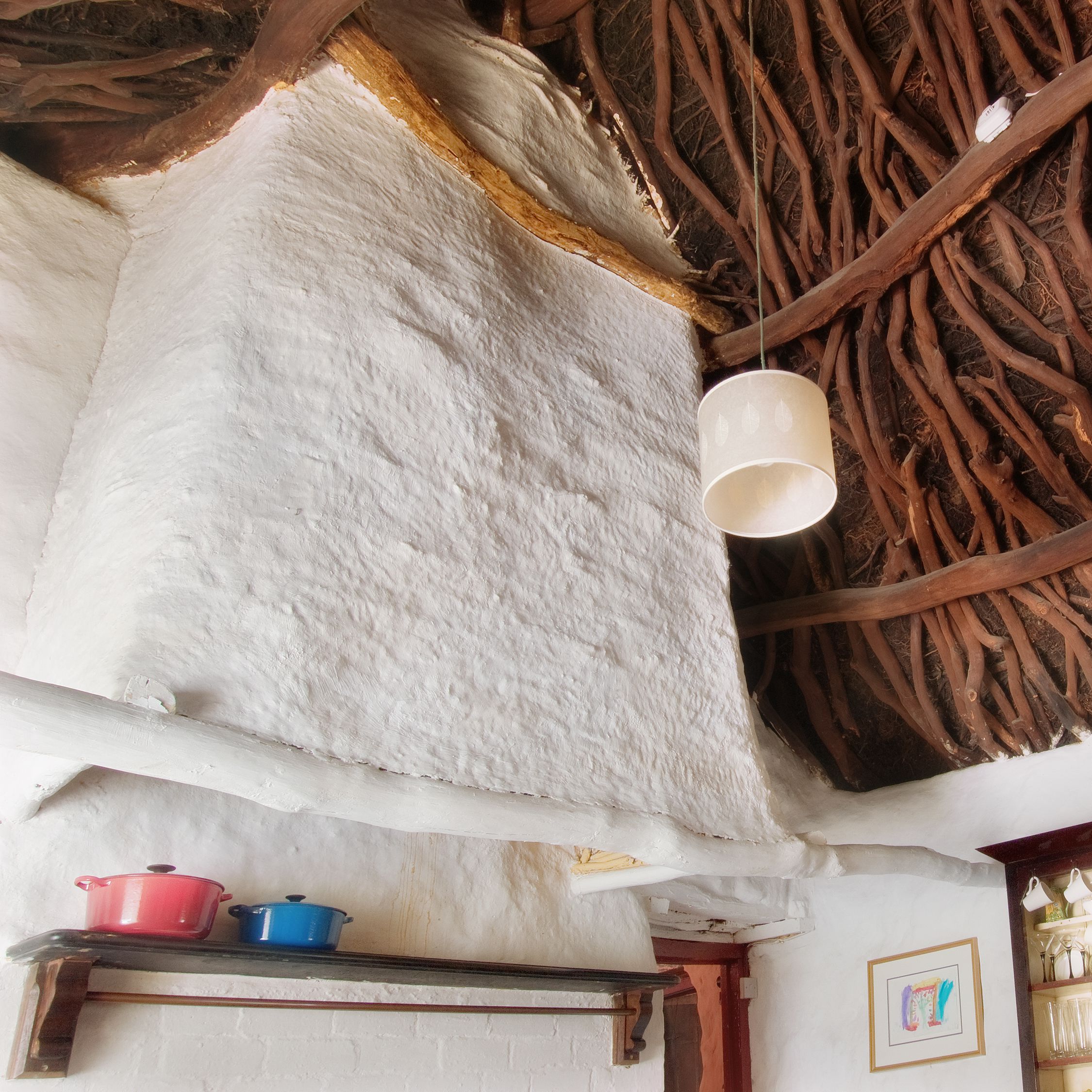
Exposed original timbers in Uchaf
The “crogloffts” are traditional sleeping platform that were once common in West Wales, as were wickerwork chimneys such as the one seen in both Uchaf and Isaf.
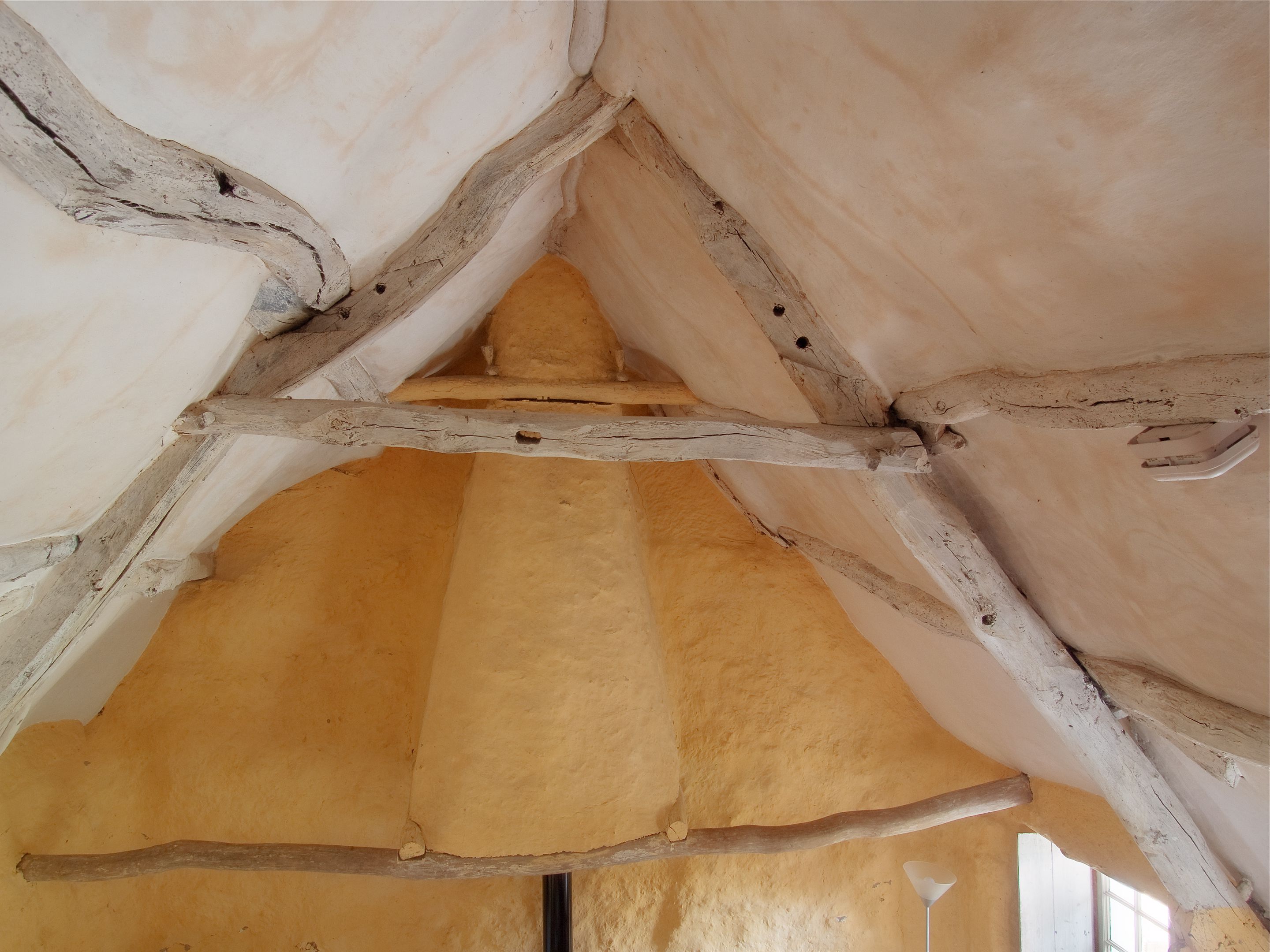
Isaf crucks and wattle/daub hood
Sadly, there are only a handful of these cottages left out of what were tens of thousands. The roof is thatched in wheatstraw, and along with the cottage in Cribyn, these are the only wheatstraw thatches left in Wales outside of a museum. Other surviving thatched cottages have all been thatched in foreign wheat, which is a cheaper and inferior alternative.
The cottage is built entirely of “clom,” a mix of mud and marshgrass, a once common building technique in the Aeron Valley. Horse hair and lamb’s wool were often mixed in. It is incredibly insulating. You can actually see horse hair poking out if you examine the walls in Isaf. They are slightly fuzzy. The walls look in need of a shave in some places.
Apart from doing repair work, no one has built in clom in this area for well over a century. The walls are protected with a traditional limewash and the oak crucks and roof structure are all original and untouched since the eighteenth century. The large timbers were more than likely salvaged from a french ship wrecked on the nearby coast. This was extremely common as the rocky coast-line is pocked with smuggler’s caves and coves. We know the origin of the timbers because they show worm holes consistent with aquatic worms. Wow. Who knew there are experts on this type of stuff.
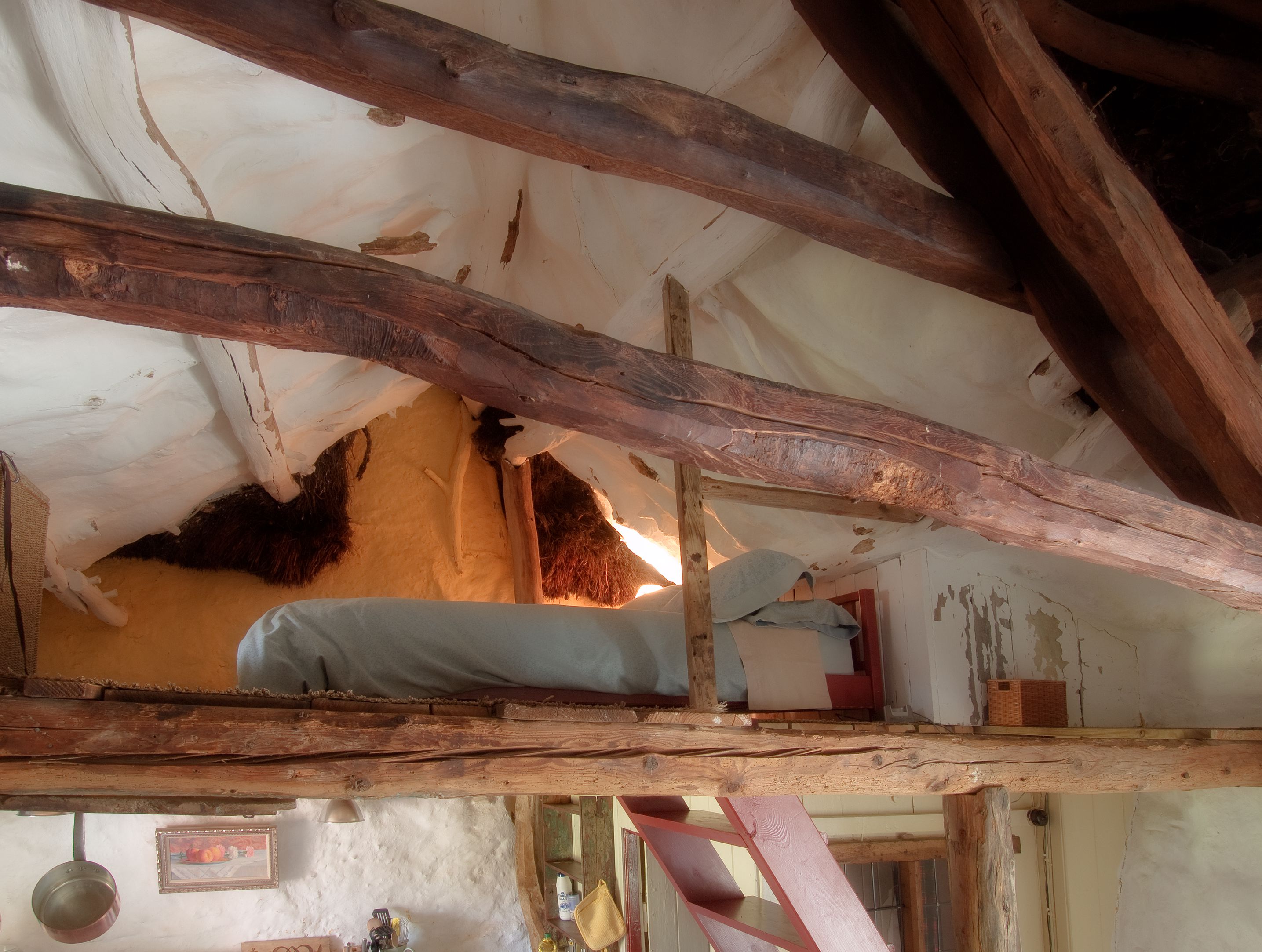
Main Uchaf croglofft showing timber possibly salvaged
In Uchaf you can see (from the main croglofft) the builders initials carved into one of the timbers. On the Isaf side there are also some carvings but we are not sure what they are.
Ffynnon Oer has been a farmer’s home, a dairy, a cow house, a school during the Welsh Methodist revival, the village tea room (the back tin room with the large display window), and a seamstress’ work space in what we now use as Uchaf’s office. Our neighbor, Mrs. Evans, remembers having tea here as a child.
I will add more about the history later.
In the meantime, here is what CADW had to say when designating the cottage as protected:
 Ffynnon Oer Tales from Wales
Recent Comments